Visit Ram Janmabhoomi Ayodhya
Dasharath Mahal is an important place in Ayodhya because it is believed to be the royal home of King Dasharatha, the father of Lord Rama. The exact date of its construction isn’t clearly known, but the palace has been restored many times over the years, keeping its traditional charm alive. It carries a strong spiritual connection to Rama’s early life, which is why many visitors make sure to stop here.My account
Inside the Mahal, you’ll see beautifully decorated idols of Rama, Sita, and Lakshmana. Daily prayers and bhajans create a calm, devotional atmosphere, making it a peaceful spot for anyone visiting Ayodhya. The colors, artwork, and quiet surroundings make the place feel warm and meaningful, not just historical.
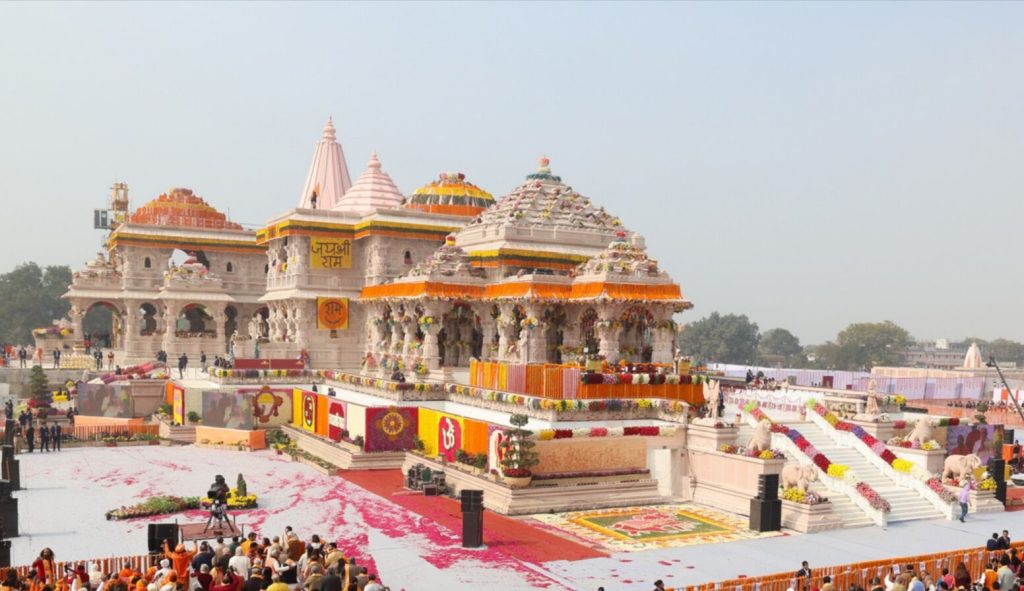
Ayodhya, one of the oldest and holiest cities in India, is believed to be the birthplace of Lord Rama, the seventh incarnation of Lord Vishnu. He was born to King Dasharatha and Queen Kaushalya in the royal palace of Ayodhya. Dasharatha had three queens and four sons — Rama, Bharata, Lakshmana, and Shatrughna — who shared a deep bond of love and respect. Known for his truth, courage, and obedience, Lord Rama always followed the path of dharma. Ayodhya today stands as a symbol of his life, values, and devotion to truth and justice.
Top Places to Visit in Ayodhya
1 – Ram Janmabhoomi Temple.
2 – Hanuman Garhi
3 – Saryu River Ghat
4 – Rajdwar Mandir
5 – Lata Mangeshkar Chowk
6 – Kanak Bhawan
7 – Dasharath Mahal
Top Places to Visit in Ayodhya
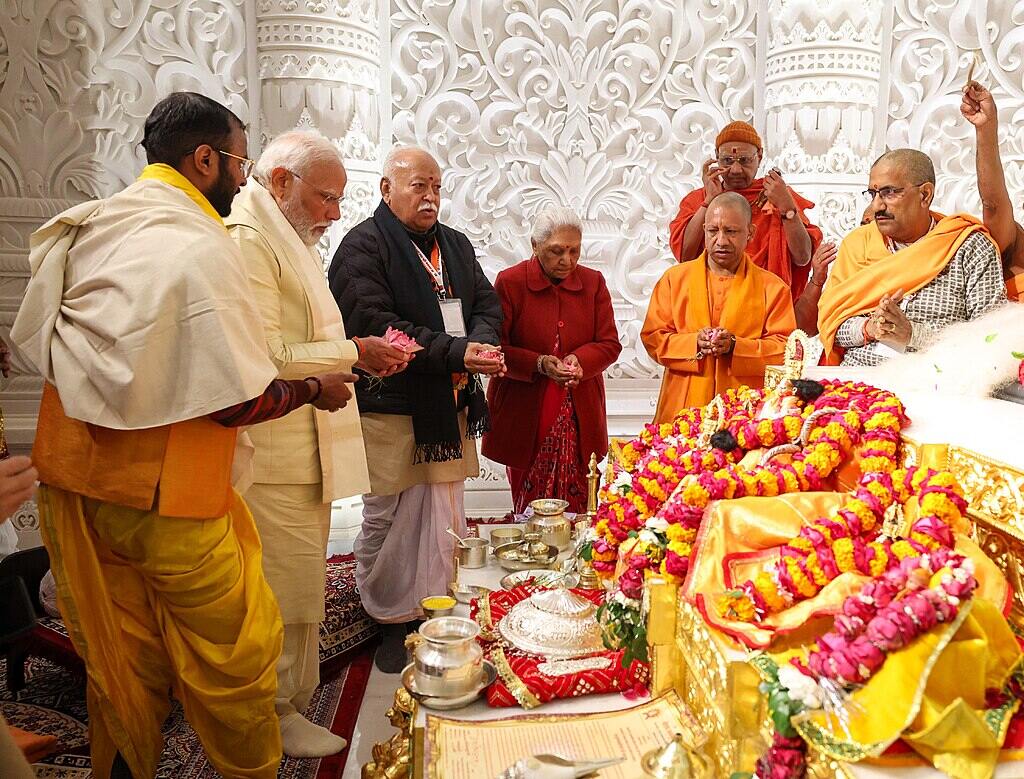
The Ram Janmabhoomi Temple in Ayodhya is one of the most sacred and historic temples in India. It is believed to be the exact birthplace of Lord Rama, the seventh incarnation of Lord Vishnu.
The temple’s reconstruction is being carried out by the Shri Ram Janmabhoomi Teerth Kshetra Trust, a body established to oversee its development. The foundation stone (Shilanyas) was laid by Prime Minister Narendra Modi on 5 August 2020. The temple has been designed in the traditional Nagara style of North Indian architecture by renowned architect Chandrakant Sompura.
The temple was built to honor and preserve the divine birthplace of Lord Rama, a site deeply rooted in Hindu faith and history. It represents a symbol of devotion, unity, and cultural heritage, creating a sacred place for millions of devotees to offer prayers and feel connected to the spiritual legacy of Lord Rama.
The Ram Janmabhoomi Temple today stands as a monument of faith, peace, and national pride, reminding the world of the eternal values of truth and righteousness taught by Lord Rama.https://youtu.be/LGrgIB_R6kk?si=dyXFUZKh9JCLt47k
2 – Hanuman Garhi
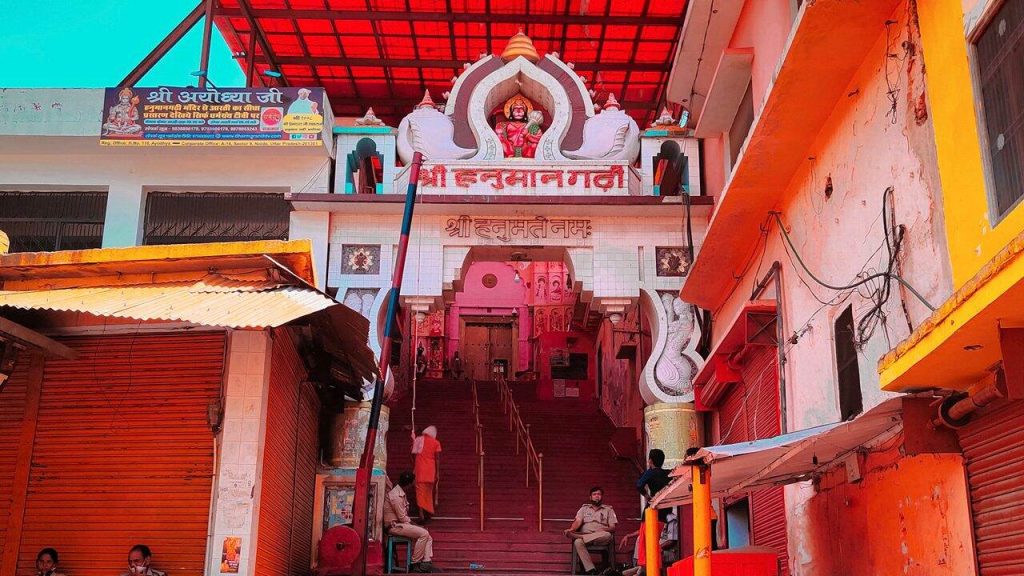
Hanuman Garhi is one of the most famous and ancient temples of Ayodhya, believed to have been built in the 10th century. It is dedicated to Lord Hanuman, the loyal devotee of Lord Rama. According to legends, when Lord Rama returned to Ayodhya after defeating Ravana, he asked Hanuman to stay in Ayodhya and protect the city. Hanuman chose this hilltop as his home — and that’s why this place is known as Hanuman Garhi (the fort of Hanuman).
The temple was later renovated by Nawab Shuja-ud-Daula’s queen in the 18th century, showing how sacred it was even across different communities. The temple is famous because devotees believe that Hanuman guards Ayodhya from all evil. It’s also said that visiting Hanuman Garhi before going to Ram Janmabhoomi brings blessings and fulfills wishes.
3 – Saryu River Ghat
The Saryu River Ghat is one of the most peaceful and spiritual places in Ayodhya. Flowing along the sacred city, the Saryu River is mentioned in many Hindu scriptures as the river that purifies the soul. Devotees take a holy dip here, especially during festivals like Ram Navami and Diwali, believing it washes away sins and brings peace.
In the evening, the Saryu Aarti is a major attraction — hundreds of lamps float on the river, creating a mesmerizing golden glow. The chants, lights, and calm water together make this place a perfect blend of devotion and serenity. Visiting the Saryu River Ghat is truly a divine experience that connects travelers to the spiritual heart of Ayodhya.
4 – Rajdwar Mandir
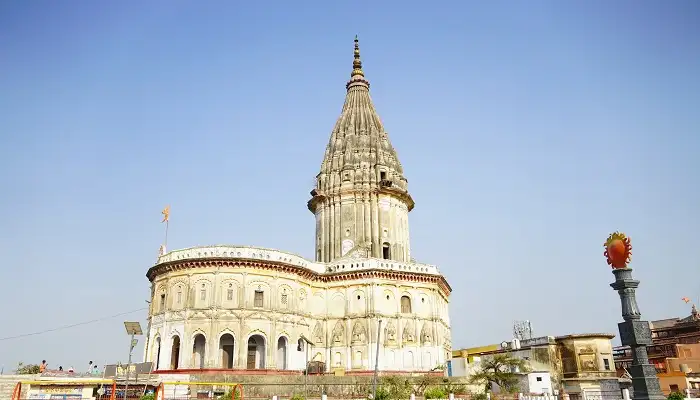
Rajdwar Mandir, also known as the Royal Gateway Temple, is one of the ancient and sacred temples of Ayodhya. It is believed to mark the entrance to King Dasharatha’s royal palace, where Lord Rama was born and spent his early life. The temple’s name “Rajdwar” literally means the royal gate.
The temple has a calm and spiritual atmosphere, with idols of Lord Rama, Sita, Lakshmana, and Hanuman worshipped by devotees. Pilgrims often visit Rajdwar Mandir before going to the main Ram Janmabhoomi Temple, as it is considered a divine doorway to Ayodhya’s spiritual heritage. Its simplicity and peaceful surroundings make it a special place for those seeking blessings and inner peace.
5 – Lata Mangeshkar Chowk
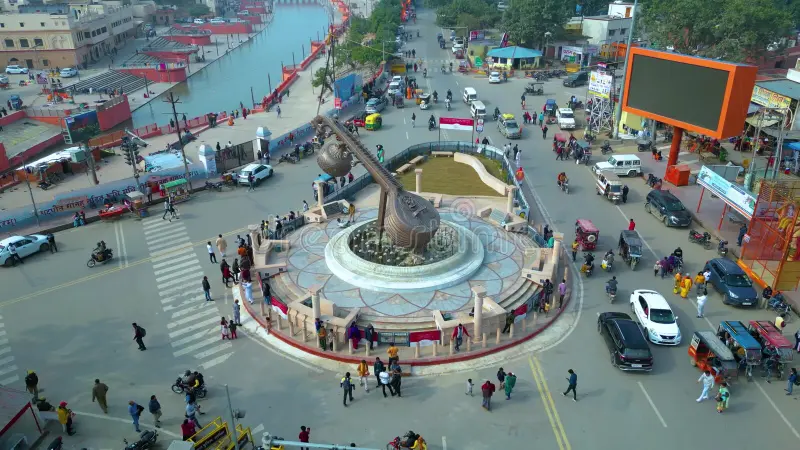
Lata Mangeshkar Chowk is one of Ayodhya’s newest landmarks, built in honor of the legendary singer Lata Mangeshkar, whose voice touched millions of hearts. Located near Ram Path close to Ram Janmabhoomi Temple, the chowk beautifully blends art, music, and devotion.
The main attraction is a grand 12-meter-tall bronze veena, symbolizing her musical journey and contribution to Indian culture. The area glows with decorative lights at night, making it a favorite spot for visitors and photographers. Built as a tribute to the “Nightingale of India,” Lata Mangeshkar Chowk adds a touch of culture and elegance to the sacred city of Ayodhya.
6 – Kanak Bhawan
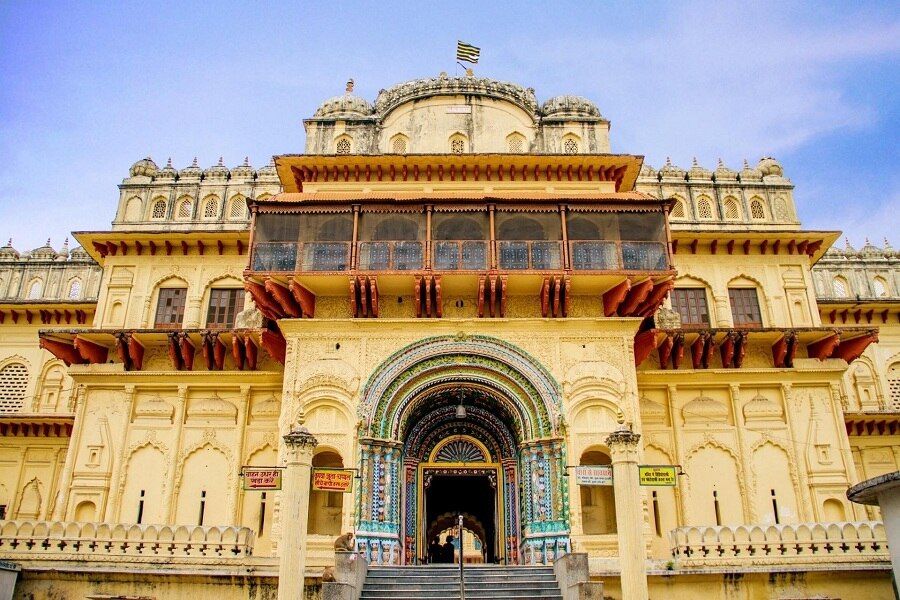
Kanak Bhawan, also known as the “Golden Palace,” is one of the most beautiful temples in Ayodhya, dedicated to Lord Rama and Goddess Sita. It is believed to have been gifted to Sita by Queen Kaikeyi after her marriage to Lord Rama. The temple’s name “Kanak” means gold, as the interiors are decorated with golden idols and intricate carvings.
The present structure was built in 1891 by Queen Vrishbhanu Kunwari of Tikamgarh, and it reflects stunning architectural beauty. Inside the temple, the idols of Rama and Sita wearing gold crowns are mesmerizing to see. Kanak Bhawan is famous for its peaceful atmosphere and is considered a symbol of love, devotion, and divine blessings in Ayodhya.
7 – Dasharath Mahal
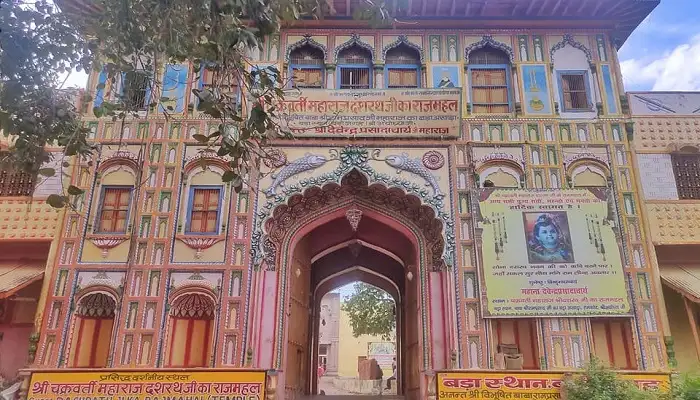
Dasharath Mahal is an important place in Ayodhya because it is believed to be the royal home of King Dasharatha, the father of Lord Rama. The exact date of its construction isn’t clearly known, but the palace has been restored many times over the years, keeping its traditional charm alive. It carries a strong spiritual connection to Rama’s early life, which is why many visitors make sure to stop here.
Inside the Mahal, you’ll see beautifully decorated idols of Rama, Sita, and Lakshmana. Daily prayers and bhajans create a calm, devotional atmosphere, making it a peaceful spot for anyone visiting Ayodhya. The colors, artwork, and quiet surroundings make the place feel warm and meaningful, not just historical.